




Description
About this model
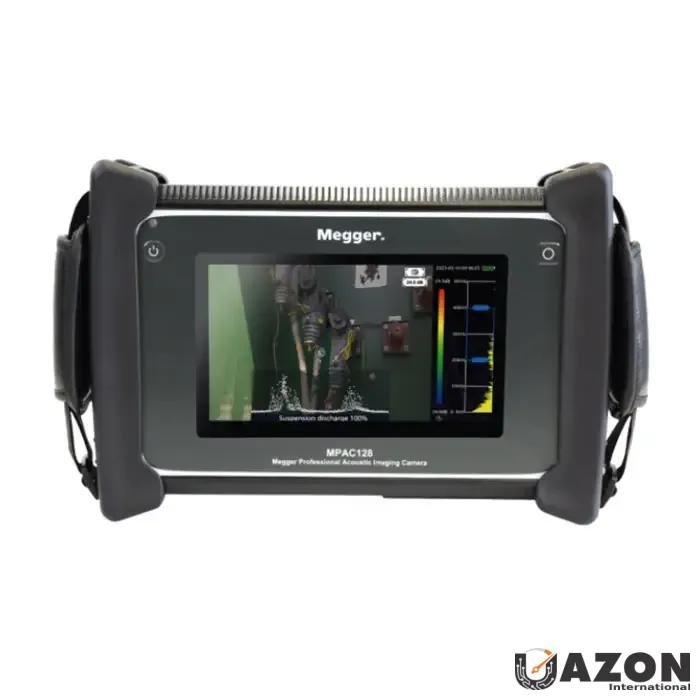
Megger MPAC128 Acoustic Imaging Camera
The Megger MPAC128 is a sophisticated acoustic imaging camera engineered to detect and visualize sound waves in real time. This advanced diagnostic tool is specifically designed to locate sources of noise and air leaks across a wide range of industrial applications. By converting ultrasonic sound waves into clear visual images, the device allows maintenance teams to identify issues that are often invisible to the naked eye or inaudible to the human ear.
Megger’s advanced acoustic imager provides clear visualization of gas leaks and partial discharge (PD), enabling facility managers and engineers to address problems before they escalate into critical safety incidents, compliance breaches, or expensive unplanned downtime. This proactive approach to maintenance is essential for modern industrial environments where reliability and safety are paramount.
Technical Features and Field Applications of the Megger MPAC128
Understanding the technical capabilities of the Megger MPAC128 is crucial for leveraging its full potential in the field. The device operates by utilizing a highly sensitive microphone array that captures ultrasonic frequencies emitted by equipment under stress. These frequencies are then processed and overlaid onto a visual spectrum, allowing the user to pinpoint the exact location of the sound source. This technology is particularly effective in noisy environments where traditional acoustic methods might fail.
The core application of the MPAC128 lies in its ability to detect partial discharge and gas leaks with precision. Partial discharge is a common precursor to electrical insulation failure, while gas leaks represent significant safety hazards and resource waste. By identifying these issues early, operators can schedule maintenance during planned shutdowns rather than reacting to catastrophic failures. The following technical features define the performance and utility of this imaging camera:
- 128 Microphone Array: This dense array configuration provides high-resolution acoustic imaging, allowing for precise triangulation of sound sources even in complex industrial settings with multiple noise emitters.
- Detection Frequency up to 48 kHz: The device captures ultrasonic frequencies well beyond human hearing capabilities, making it ideal for detecting high-pressure gas leaks and electrical partial discharge signatures that are distinct from background noise.
- Detection Range up to 120 Meters: With a substantial effective range, the MPAC128 allows operators to scan large equipment and hard-to-reach areas from a safe distance, reducing the need for direct contact with potentially hazardous machinery.
- 8 MP Optical Camera Resolution: The integration of a high-definition optical camera ensures that acoustic data is overlaid onto crisp visual imagery, providing clear context for the location of the detected anomaly.
- 7” Screen: The large, intuitive display facilitates real-time analysis and sharing of data on-site, allowing for immediate decision-making without the need for external processing devices.
- Intelligent Analytics: Built-in processing algorithms help distinguish between different types of acoustic signatures, reducing false positives and highlighting critical issues that require immediate attention.
- Ultrasonic Monitoring: The device supports continuous monitoring capabilities, enabling trend analysis over time to predict equipment degradation before functional failure occurs.
Strategic Benefits of Acoustic Imaging for Industrial Maintenance
Implementing the Megger MPAC128 into a maintenance strategy offers significant return on investment through cost avoidance and operational efficiency. Traditional maintenance methods often rely on scheduled inspections or reactive repairs after failure occurs. Acoustic imaging shifts this paradigm by enabling condition-based monitoring, where maintenance is performed only when data indicates a genuine need. This transition from time-based to condition-based maintenance is a key driver of productivity in modern industry.
One of the primary benefits of the MPAC128 is its ability to detect gas leaks that are otherwise invisible. Compressed air systems are notorious for energy waste due to leaks; the U.S. Department of Energy estimates that the average industrial facility loses a significant percentage of its compressed air output to leaks. By using the MPAC128 to locate and quantify these leaks, facilities can drastically reduce energy consumption and lower utility costs. The device visualizes the ultrasonic noise generated by turbulent gas flow, allowing for rapid repair.